Designing and installing your very own luxury home cinema is an exciting project. You may have already chosen a space, created a mood board, and even started researching high-end AV equipment. But what comes next?

This guide will walk you through everything you need to know about creating a reference-grade home theatre, from professional installation to acoustic treatment and calibration, ensuring your cinema delivers the ultimate immersive experience.

Bronze Jewel-Impression Series

Why Professional Installation is Essential for a High-End Cinema

Installing a high-performance home cinema is like crafting fine jewellery – you might manage the basics, but precision and artistry come only from skilled hands.

Every space is unique, with its own set of design and acoustic challenges. Partnering with an experienced home cinema designer and installer ensures that your system is optimised for both performance and aesthetics.

Tips for choosing the right professional:

  • Check their credentials: Have they completed specialised training like CEDIA’s RP22 course, the industry standard for cinema design?

  • Read reviews and testimonials: Look at customer feedback or testimonials to understand their quality of service.

  • Look for awards: A company recognised by CEDIA or industry magazines for cinema design excellence demonstrates a proven track record of high standards.

What to Expect During the Initial Consultation

The consultation phase is where your vision starts taking shape. A specialist will work with you to define your wish list, design preferences, and technical requirements.

Key steps in this stage:

  • Reviewing your mood board or inspiration images to better understand your style.
  • Scheduling a showroom demo to experience different performance levels firsthand. It is critical that you have a clear understanding of what you want in terms of system performance. A good designer will engineer an outcome rather than offer package solutions.
  • Assessing feasibility: For example, seating is often a point of misalignment. Many clients want to fit more seats than the room can accommodate without compromising audio and viewing quality.
  • Discussing how the cinema integrates with your home’s architecture and design aesthetic. This includes engineering items such as sound isolation, A/C design, mechanical ventilation & fresh air and internal room acoustics.

Choosing the Right AV Equipment and Seating for Your Space

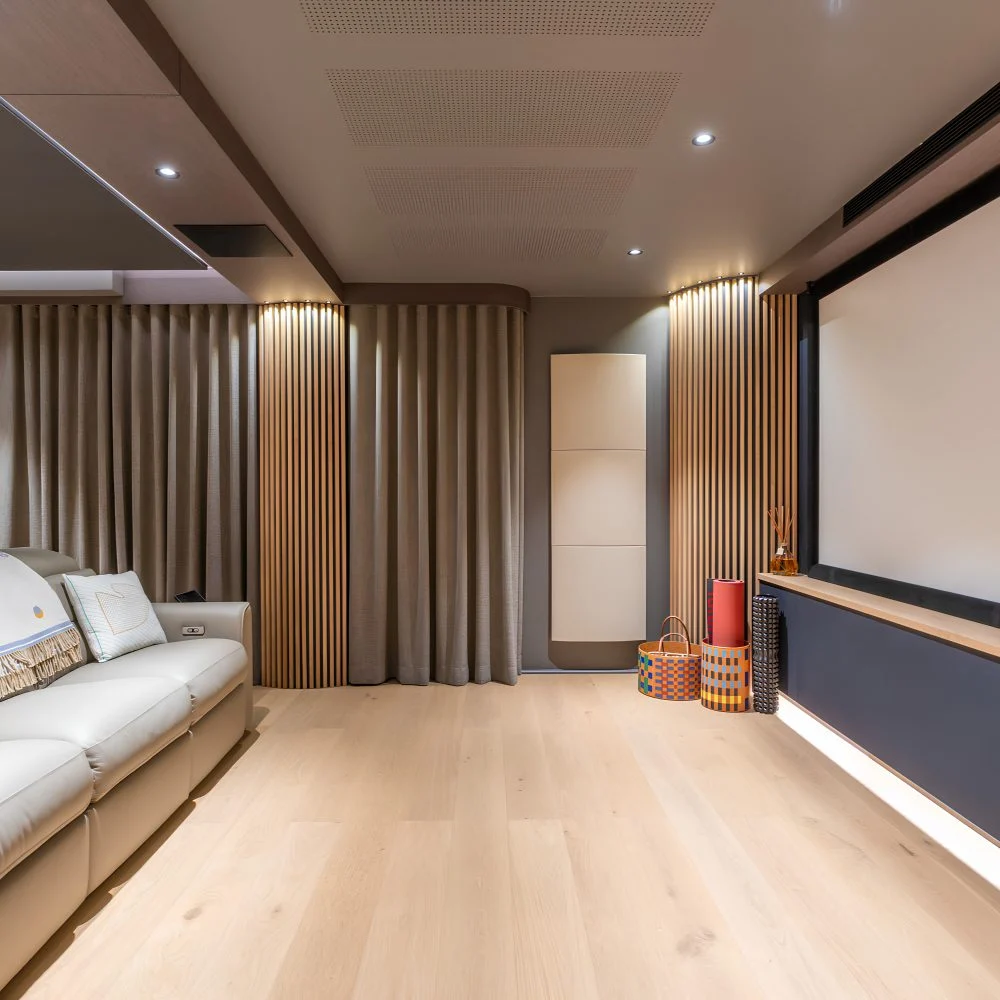
Your room size is the starting point for determining seating arrangements and selecting the right AV equipment. Once the seating layout is finalised, acoustic engineering, speaker placement, and screen positioning can be optimised for the best performance.

The-Serenity-Cinema-06

General seating guidelines:

  • For a 5m x 4m room (20m²), 4 seats is ideal.
  • For a 7m x 4.5m room (31.5m²) or larger, you can comfortably seat 8 or more people.

The larger the room, the more audio power and light output you will need to achieve a reference-grade cinematic experience. Speakers further away will require perhaps twice the power & a larger screens will be required if you sit further away. Large rooms are cinematic in scale but do come with a higher cost.

Audio Equipment

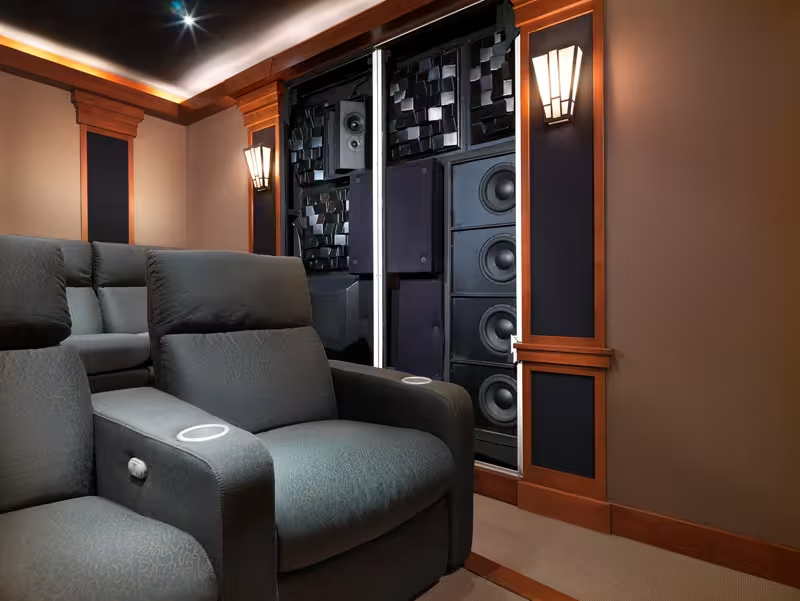
A truly immersive home cinema relies on high-performance speakers and precisely tuned amplification. Key considerations include:

  • Speaker configuration: Whether opting for Dolby Atmos, DTS:X, or Atmos, the number of speakers and their placement directly affect the sense of immersion. A 7.2.4 system (7 surround speakers, 2 subwoofers, 4 overhead channels) is common for medium rooms, while larger spaces may require 9.4.6 or more.

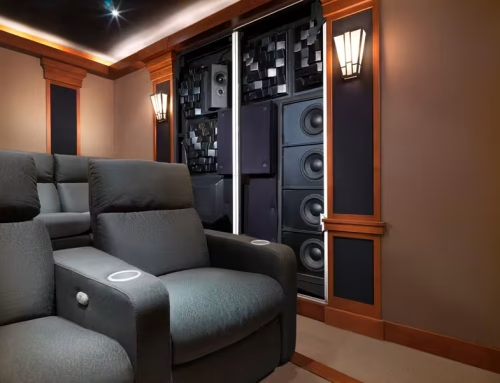
  • Subwoofers: Multiple subwoofers ensure smooth, balanced bass response throughout the seating area. Most rooms will benefit from having 4 or more subwoofers.

  • Amplification: Dedicated home theatre amplifiers and processors ensure each speaker receives the right power for distortion-free sound. Digital active systems use multiple amplifiers per speaker and offer significant advantages with reduced distortion and DSP control, leading to increased dynamics and fidelity.

  • Calibration: Professional tuning ensures the entire system is balanced for clarity, depth, and dynamics. This goes beyond standard auto-tune software and includes system verification, pre-tuning and custom sound curves to suit personalised taste.

Visual Equipment

The screen size and projector must complement both the room dimensions and the seating distance:

  • Projector: For a luxury home cinema, a 4K HDR projector with high brightness and contrast ratios is essential. Laser projectors, such as Christie’s RGB pure laser range , offer exceptional colour accuracy and longevity to match the 4K UHD standards of REC2020 and offer 200-300 Nit brightness for incredible dynamics.

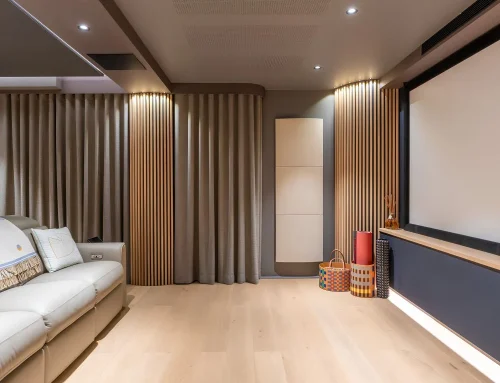
  • Screen: Acoustically transparent screens are ideal, allowing speakers to be placed behind the screen for a true cinematic layout. Screen size should match the room’s throw distance and maintain optimal viewing angles for every seat. Not all screens are equal and need to be specifically matched to the display for optimal performance.

  • Video processors: These enhance content quality, ensuring that even streamed or compressed content achieves near-reference playback.

  • Calibration: The last key element to all systems is video calibration. Video standards are very high in the movie industry and with studio grade equipment, we fine tune each system to best meet those standards. With Christie RGB laser, there is very little we need to do, but less expensive projectors require careful calibration to achieve the best results.

Christie-M-4K15-RGB-Laser-Projector Australia

Control and Integration

Modern home cinemas benefit from smart control systems that simplify operation:

  • Single-touch automation for lighting, sound, and playback. Complex remote systems should be avoided. A well-designed remote will be initiative & offer great control for the entire family.

  • Hidden AV racks to keep equipment organised and out of sight while maintaining airflow and accessibility. Cabling should be segregated into power and signal, with good ventilation and clear labelling.

The Importance of Acoustic Treatment and Calibration

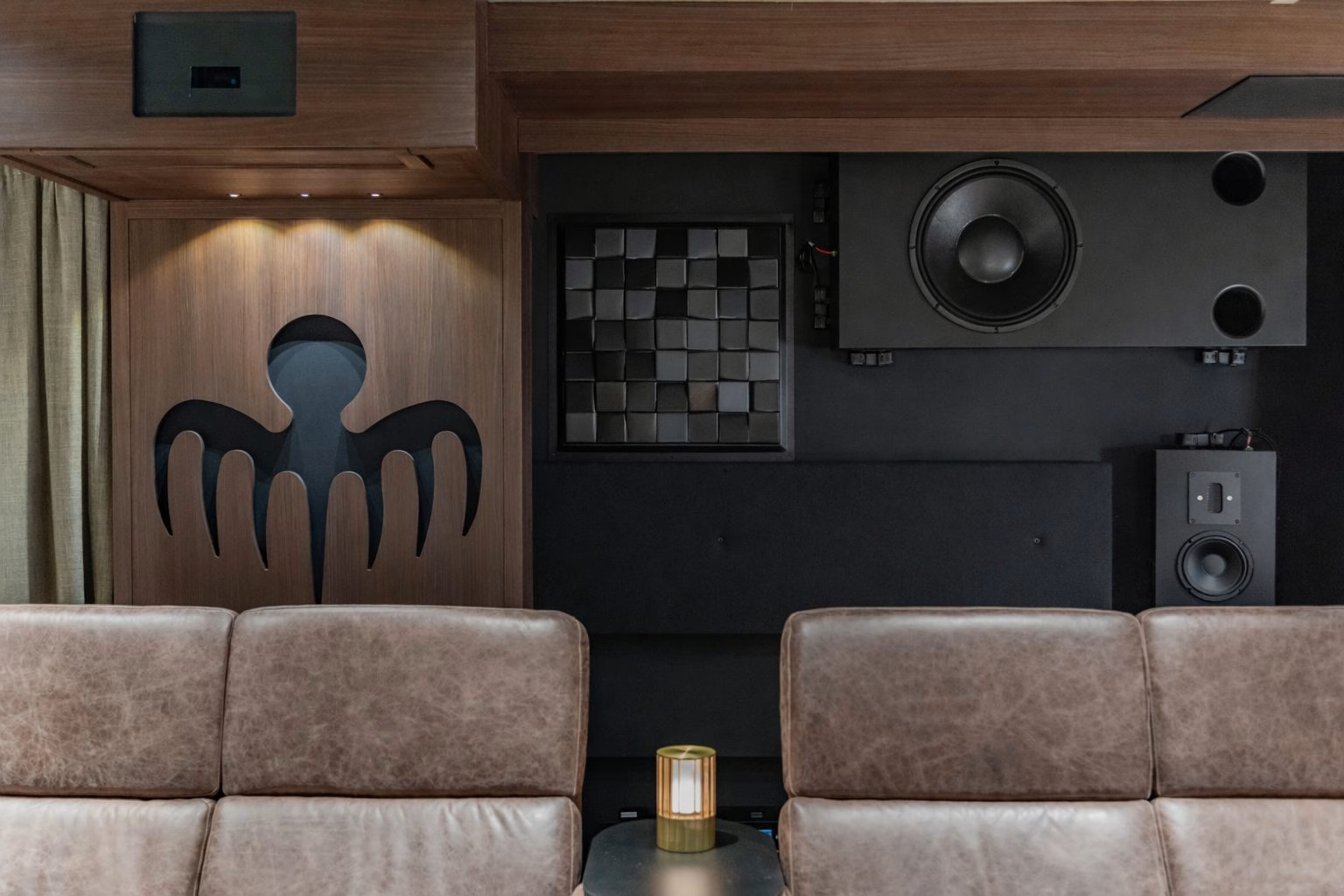
Top-tier equipment alone isn’t enough to achieve a true cinema-grade experience. Proper acoustic treatment and room calibration are essential to eliminate unwanted reflections, improve clarity, and ensure your sound system performs at its best. Each room required specific design attention, as reverb times are based on room volume. Acoustics is very much the application of engineering, however there is no substitute for expertise. There are many companies offering acoustics solutions, but very few with the skill to engineer to an outcome.

Professional calibration aligns your system to industry reference standards, giving you the same cinematic quality intended by filmmakers.

Final Testing, Tuning, and Client Walkthrough

After installation, your home cinema undergoes thorough testing and fine-tuning. A client walkthrough ensures you understand how to operate the system while experiencing the room’s performance as intended.

Ongoing Support to Keep Your Cinema Performing

A high-end home cinema is an investment. Ongoing maintenance and technical support will keep your system performing at reference level for years to come. Many providers offer service packages to ensure firmware updates, recalibration, and system checks are done regularly.
Ready to Create Your Dream Media Room?

Partner with a specialist who understands the balance between technical precision, acoustic engineering, and design excellence to bring your vision to life.

Transform Your Vision into Reality

Transform Your Vision into Reality