Acoustics Series: Part One
There is a point early in designing a private cinema when attention almost always moves to equipment. Which projector. Which processor. How many speakers. What screen. Those questions are valid, and the answers matter, but they are not the first question.
It begins with the room.
Every part of a home cinema system performs inside a physical space. The projector, screen, speakers, amplification and processor are all shaped by the cinema room around them. That room absorbs and reflects the sound waves those components produce. It determines where bass builds, where it disappears, how long a sound lingers after it is made, and whether dialogue reaches the listener cleanly or wrapped in early reflections. Before a single component is specified, the acoustic design of your room has already begun deciding how much of the filmmaker’s intent you will actually hear.
The room is the instrument. Everything else plays inside it.
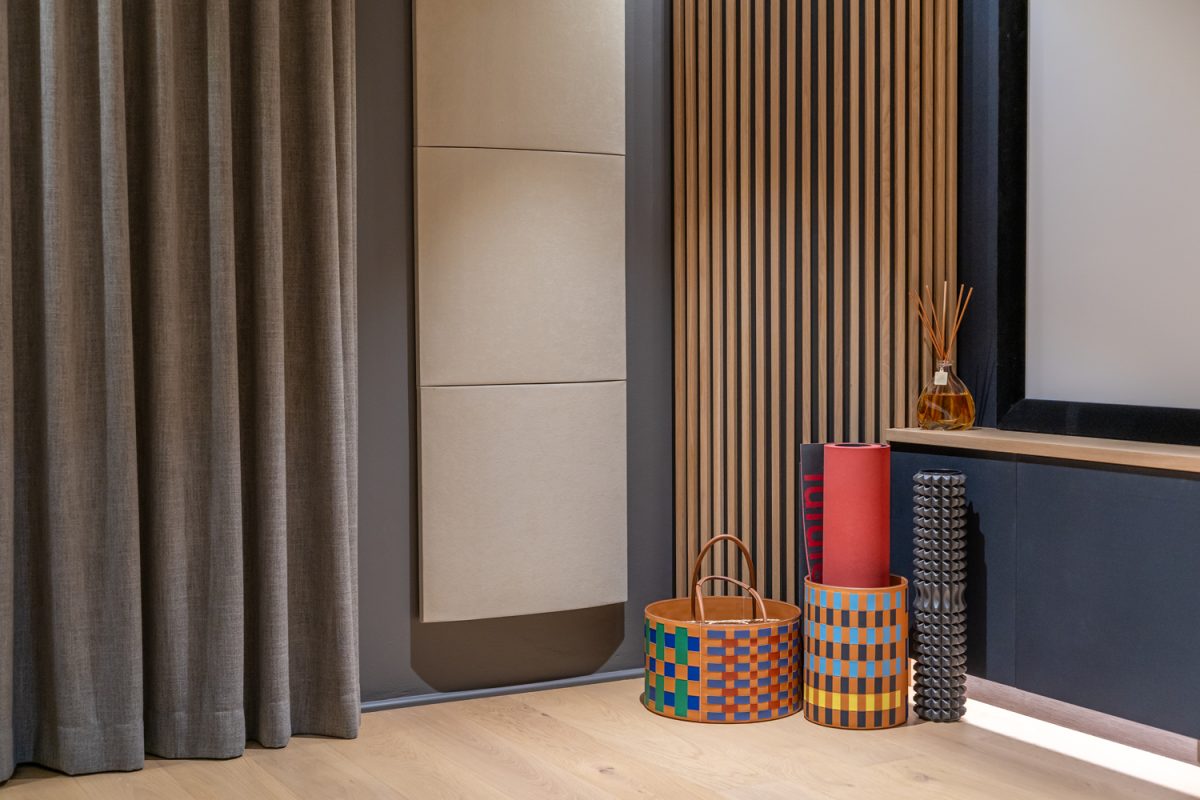
The problem most people do not know they have
Imagine two home cinema rooms using identical sound systems. In the first, high-quality surround sound speakers, a carefully chosen processor and calibrated subwoofers are installed in a room where acoustic design was part of the process from the beginning. The room dimensions have been considered deliberately. The speaker placement relates to the geometry of the space. The walls and ceilings include appropriate acoustic treatment. The result is a home cinema that can perform close to its design potential.
In the second, the same equipment is installed in a room shaped by architecture alone. A standard rectangular space, a typical ceiling height, parallel walls, hard surfaces and no meaningful acoustic treatment. The equipment is identical. The calibration may be competent. Yet the result is a different experience: bass that booms in some seats and vanishes in others, dialogue that fluctuates in relation to the rest of the soundtrack making it difficult to follow without constantly adjusting the volume, and a room that makes the sound system feel less precise than it should.
The difference is not the equipment. It is the room.
This is one of the most common problems in home cinema and home theatre design. Equipment decisions are made before acoustic decisions. Cinema rooms are built before anyone has considered how sound will behave within them. Acoustic panels are added later as an afterthought rather than as part of a considered acoustic solution. The outcome can look impressive, but the sound quality is compromised before the system is switched on.
A luxury home cinema should not rely on equipment to solve a room problem. The cinema room itself has to be designed acoustically, structurally and technically as a single, unified environment.
What a room actually does to sound
Sound is created by air displacement causing fluctuations in pressure. When those pressure waves meet a boundary such as a wall, floor or ceiling, they reflect. In a typical room, a single sound event generates many reflections that bounce around the space and arrive at the listening position from different directions at slightly different times.
Some reflection is useful. It contributes to a sound that feels natural and three-dimensional. Too much reflection, or reflection arriving too early, interferes with the direct sound from the speakers. Dialogue becomes less distinct. Surround sound effects lose their intended position in the room. The immersive cinema experience softens into a general impression of activity rather than the precise, intentional placement the audio director intended.
High and low frequencies behave differently, and that distinction sits at the centre of understanding home cinema acoustics.
High frequencies are directional. They can often be managed with absorptive materials placed at first reflection points on the walls and ceiling. A well-positioned acoustic panel can absorb mid and high frequency energy before it reaches the listener and interferes with the direct sound. This kind of acoustic treatment is relatively straightforward, and it is where most conversations about acoustic panels for home cinema rooms begin and, unfortunately, often end.
Low frequencies are a significantly harder problem.
At low frequencies, sound waves are physically very large. A 40Hz signal, the kind of deep bass that gives an action film its physical weight, has a wavelength of roughly eight and a half metres. A thin acoustic panel on a wall cannot absorb that energy in any meaningful way. The physics do not allow it. Bass control in a home cinema room requires mass, depth, volume and carefully considered room geometry. In some cases it requires bass traps engineered specifically for the frequency problems of that particular space.
This is why home theater acoustics cannot be resolved by installing acoustic panels after the room is built. Panels can help manage reflection and reverberation, but low frequency control depends on the dimensions of your room, its shape and volume, and how sound energy behaves within that space before any treatment is applied.

Room modes: why your room rings like a bell
When low frequency sound travels between parallel surfaces, such as the left and right walls, the floor and ceiling, or the front and rear walls, it reflects back on itself. When the dimensions of the room align with the wavelength of a particular frequency, the reflected wave reinforces the original. That frequency builds into resonance. Acousticians call this a room mode, and in an untreated home cinema room, they are present throughout the bass range.
In practice, room modes create standing waves. Certain bass frequencies become much louder at specific positions in the room and much quieter at others. Move one seat across the row and the bass response may change dramatically. Sit in a pressure peak and the bass can feel bloated, slow and detached from the rest of the soundtrack. Sit in a null, where two wave interactions cancel each other out, and the same bass frequency may seem to disappear entirely.
This is why two seats in the same home cinema can sound like two different rooms. It is also why the apparent centre position is not automatically the most accurate seat. Without acoustic design, the room’s own resonance can dominate what the listener hears regardless of what the sound system is producing.
Equalisation cannot fully correct severe room mode problems. EQ can reduce a peak by lowering energy at a specific frequency. It cannot restore energy to a null, because the cancellation is happening within the acoustic physics of the room itself. Genuine control requires room dimensions, subwoofer placement strategy, acoustic treatment depth and calibration working together from the design stage.
The aim is not to make a home cinema room sound unnaturally flat. It is to create a consistent, controlled frequency response so that every listener receives the same intended balance of weight, impact and clarity across the listening area.
Reverberation time: how long should a cinema room breathe?
Beyond individual frequencies, there is the question of how long sound persists in the room after the source stops. This is reverberation, commonly measured as RT60: the time it takes for sound to decay by 60 decibels. It is one of the most important metrics in home cinema acoustic design.
A cathedral may hold sound for several seconds. A concert hall designed for orchestral music allows music to bloom within a longer decay. A private cinema needs a considerably more controlled acoustic environment, because film sound depends on clarity, precise localisation and dynamic contrast.
For a dedicated home cinema or home theatre, reverberation time is typically much shorter than in music performance spaces. Industry standards from Dolby, THX and the ITU establish a target in the range of 0.3 to 0.5 seconds for critical listening environments. The goal is not silence. It is controlled decay, with the room allowing immersion without obscuring detail.
Dialogue must arrive clearly. Surround sound effects need stable, defined positions. Height channels in an immersive Dolby Atmos system depend on the listener receiving direct sound before reflections from the walls and ceiling complicate the image. If the room breathes for too long, voices blur, effects lose their edges and a carefully mixed surround sound track collapses into a less specific impression of activity.
The opposite problem is equally real. A home cinema room with too much absorption can feel dead. If every surface is treated with absorptive material without consideration for diffusion or tonal balance, the space loses life. The experience becomes small, dry and fatiguing to listen to over the length of a film.
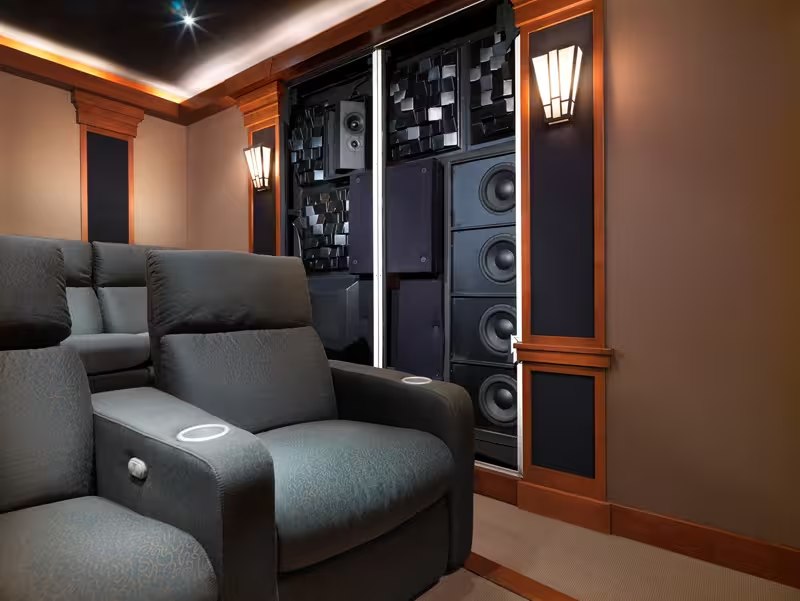
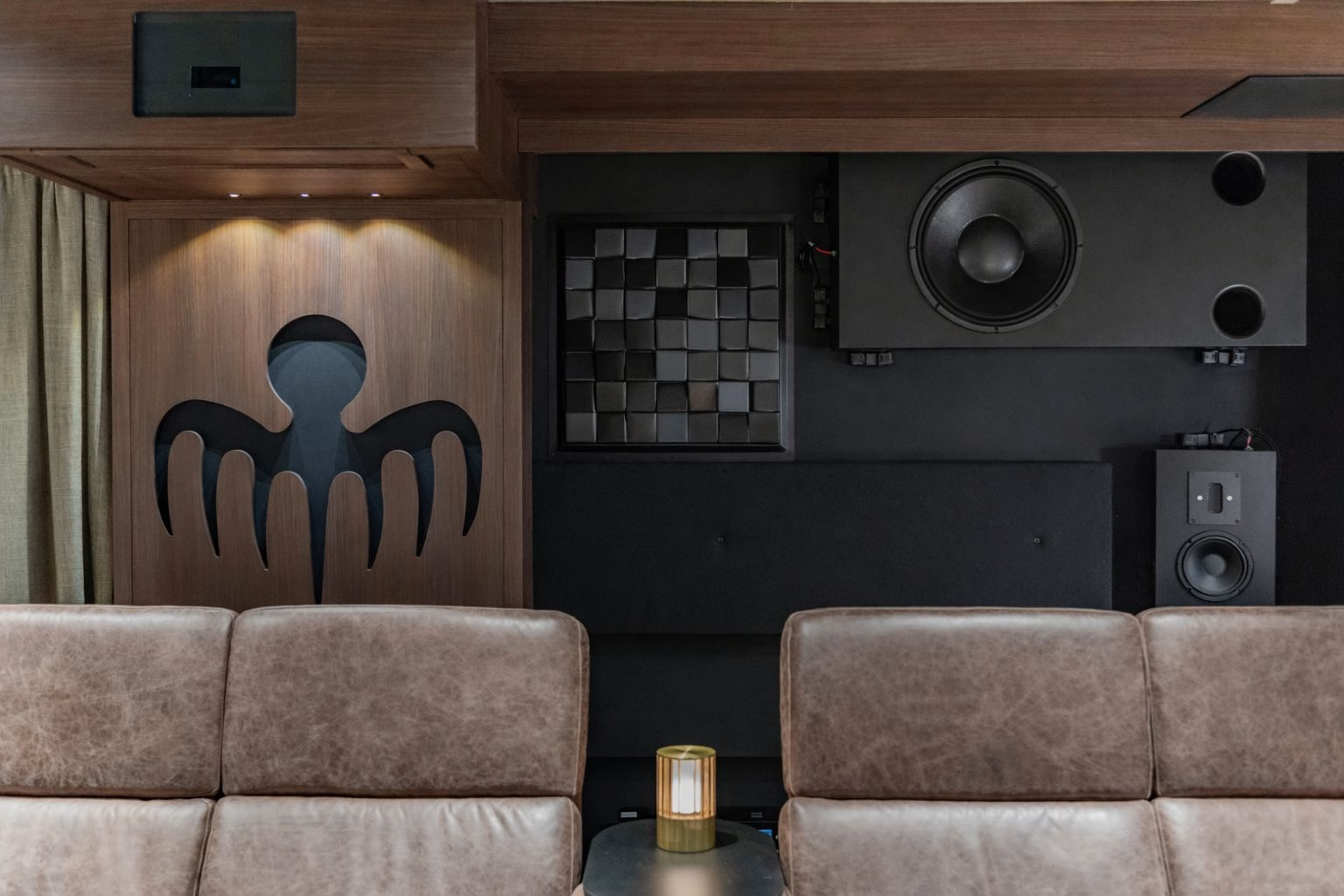
The better outcome sits between those extremes. Acoustic treatment should manage reflection, absorption and diffusion so that the room remains focused without feeling airless. Diffusers, absorptive wall panels, ceiling treatment, acoustic fabric systems and bass traps all have specific roles, but only when they are specified for what a particular room actually needs rather than applied as decoration.
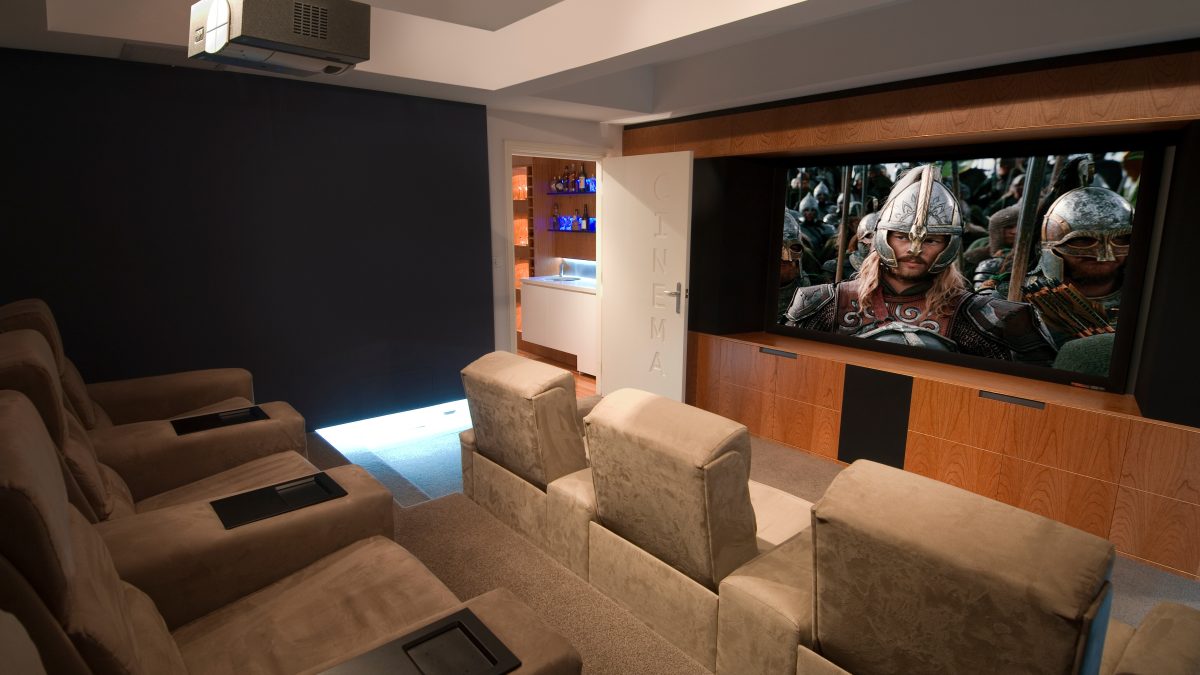
Isolation: what the room keeps out matters as much as what it keeps in
Home cinema acoustic design has two sides. The first is what happens inside the cinema room: reflection, absorption, diffusion, resonance, frequency response and reverberation time. The second is sound isolation, which controls what enters the room from outside and what escapes from it into the rest of the home.
Both matter more than most clients expect when they begin designing a private cinema.
The noise floor of a cinema room has a direct effect on perceived performance. A home cinema beside an HVAC plant, below a bedroom or near a street is competing with external noise before the film begins. The quiet details in a film’s soundtrack, the spatial cues, the room ambience embedded in a recording, the subtlest elements of a sound design, only become audible when the room itself is quiet enough to reveal them. A high noise floor raises the threshold at which those details can be heard.
Acoustic isolation is not the same as applying acoustic panels to the walls of a home cinema. Panels manage sound behaviour within the room. Isolation requires construction methods that reduce sound transmission through the structure itself. Sound isolation door systems, floating floors, isolated wall and ceiling assemblies, solid-core doors with acoustic seals and carefully managed service penetrations are part of the room’s construction, not additions to it.
The same principle protects the rest of the home. A cinema operating at reference levels produces significant low frequency energy. Without proper structural isolation, that energy travels through slabs, framing and adjoining spaces. It is heard or felt in bedrooms, living areas and neighbouring rooms.
Once construction is complete, sound isolation is very difficult and expensive to correct. The right decisions are made when the room is still being designed, before walls are closed, services are fixed and finishes are applied. For Wavetrain Cinemas, isolation is not a separate consideration from cinema performance. It is part of the performance brief from the first conversation.
Why architecture and acoustics have to be the same conversation
The most important acoustic decisions in a private cinema are made before the equipment is selected. They are made when the room’s dimensions are fixed, when the ceiling height is set, when the room is positioned within the home, when the structural floor is chosen, and when doorways, services and adjoining spaces are resolved.
Each of those decisions either supports or limits the acoustic outcome. Some cannot be corrected once construction is complete.
Room proportions that cause modal clustering, where multiple room modes fall at similar frequencies and compound each other, are difficult to correct with treatment alone once the room is built. A home cinema located directly below a bedroom without structural isolation will transmit low frequency energy upward regardless of what is done to the interior surfaces. A ceiling that is too low limits the height channel performance of a Dolby Atmos system in ways that calibration cannot compensate for. A room with too many parallel hard surfaces will encourage reflection and standing waves that make acoustic treatment far more demanding.
These are not unusual edge cases. They are the practical realities of designing a luxury home cinema within the constraints of real architecture, where the room’s geometry, volume, structure and position in the building all affect the acoustic outcome before any equipment is introduced.
A cinema room cannot be designed acoustically at the end of a project. By the time construction is finished, the shape and dimensions of the space may already have determined the limits of what is achievable. Acoustic performance plays out through the architecture: the geometry, the building fabric, the surfaces and the way the room connects to the rest of the home.
Architecture and acoustics are the same conversation. The design of a private cinema is not only a question of where to place a projector or how many Atmos channels to specify. It is a question of how the entire room supports the image, the sound system and the people sitting inside it.
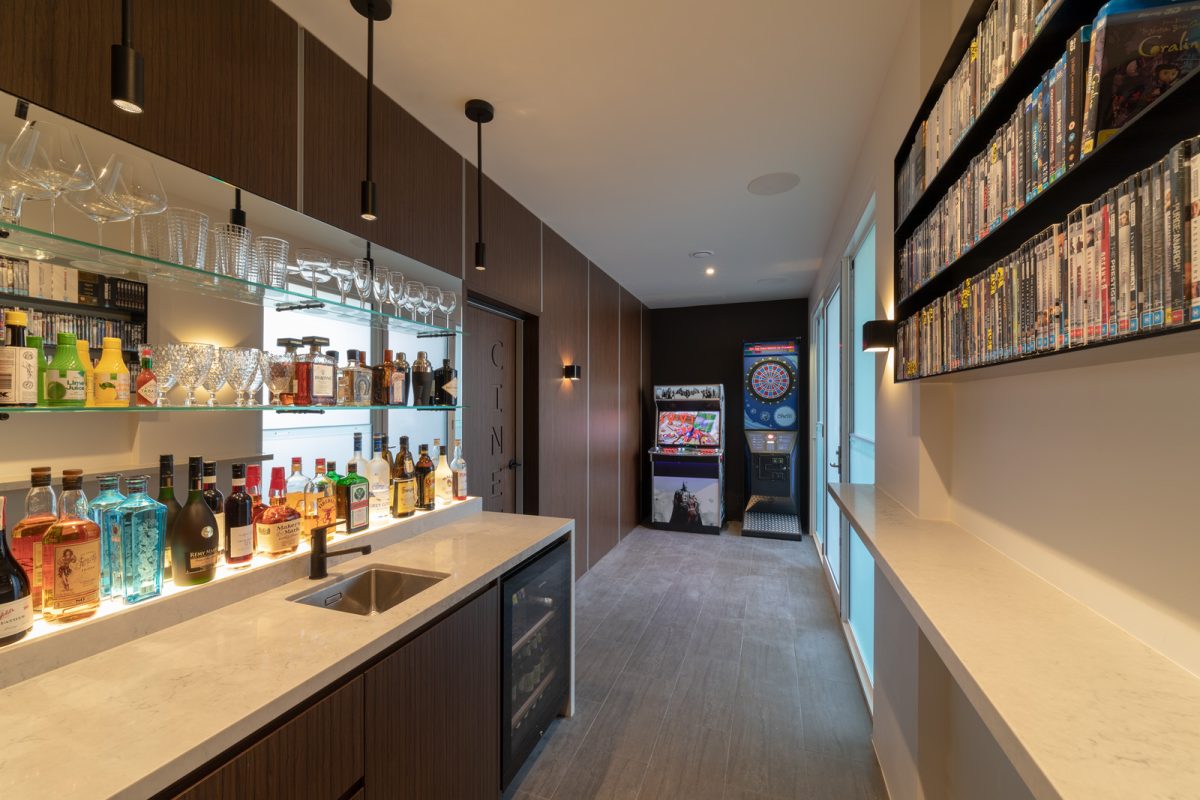
What this means in practice
When Wavetrain Cinemas begins a new project, the acoustic assessment starts before the equipment conversation. We look at the proposed room dimensions and model the likely modal behaviour. We consider where the home cinema room sits within the building and what sound isolation it will require. We assess ceiling height in relation to the audio format the room is being designed to support. We consider how treatment, absorption, diffusion and room volume will interact to achieve the right reverberation profile for a dedicated cinema environment.
This is not a checklist. It is the study of a specific room and the decisions required to make that room perform as a cinema. The goal is to give the finished home cinema a foundation that allows every part of the system to work as designed.
Equipment matters. Calibration matters. The quality of the projector, screen, speakers, processor and amplification all affect the result. But every one of those elements performs inside the room. The room is the first variable and the hardest to correct once the decisions have been made.
Get the room right, and the rest of the system has a chance to perform as intended. Get it wrong, and the finest equipment in the world cannot fully compensate.
For a bespoke home cinema or dedicated media room where acoustic design is considered from the outset, speak with Wavetrain Cinemas before the room dimensions are finalised and before the equipment list is written.
Part Two of this series examines the specific challenge of low frequency control in a private cinema: why bass is the hardest acoustic problem to solve, and what genuine control actually requires.