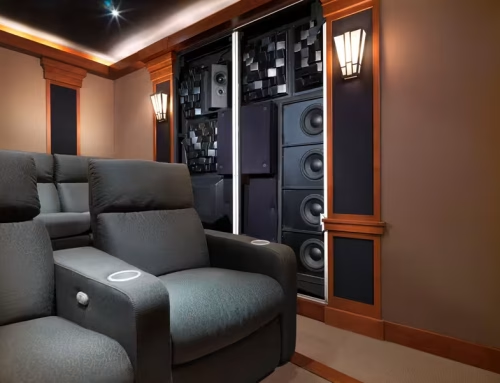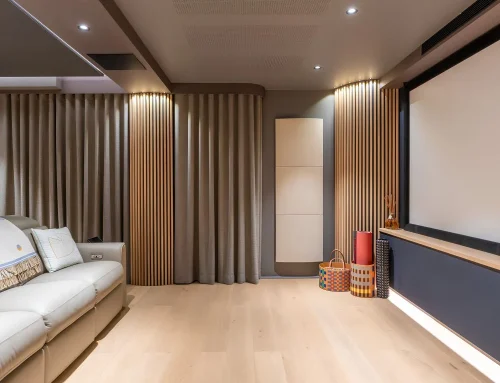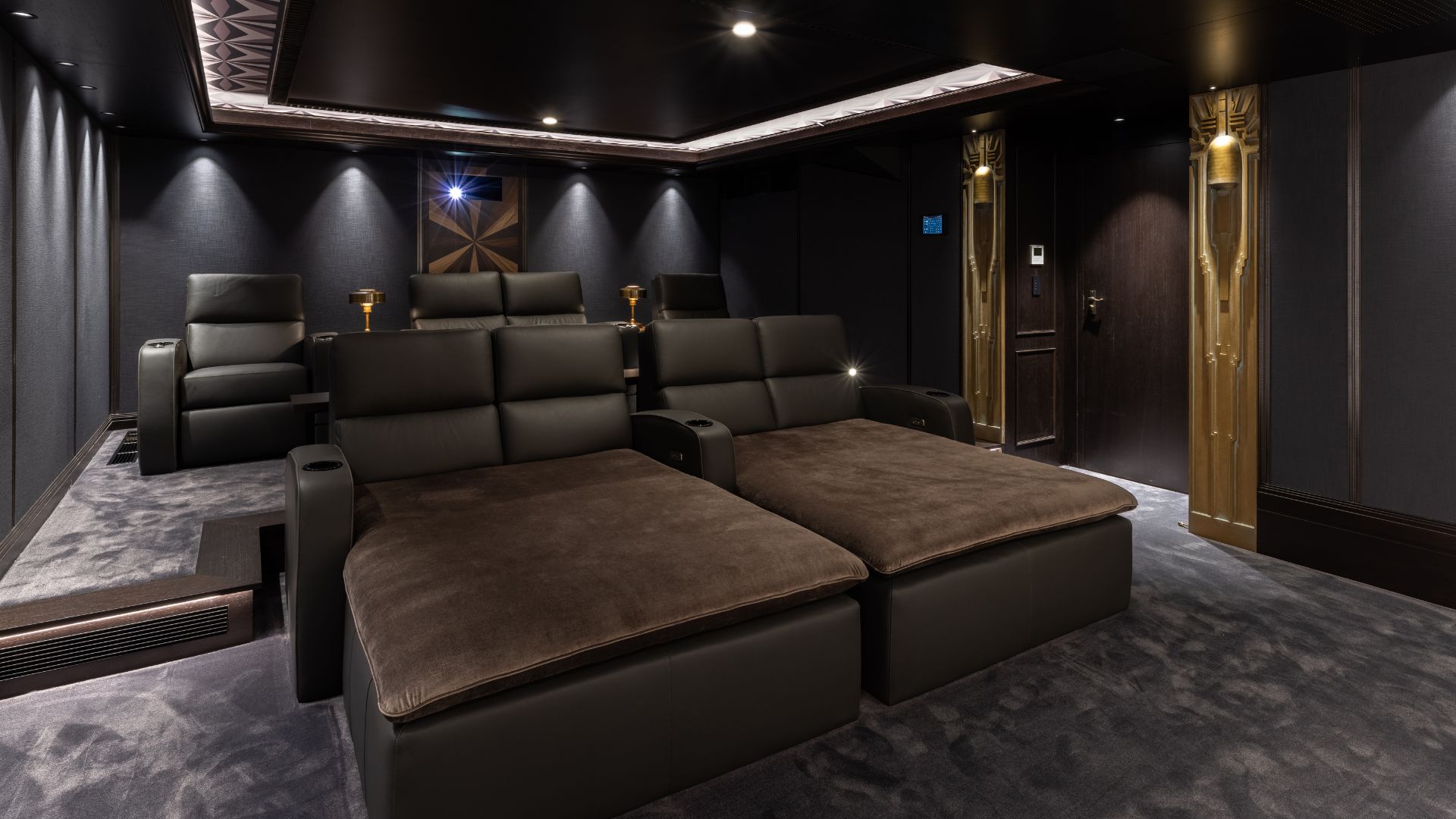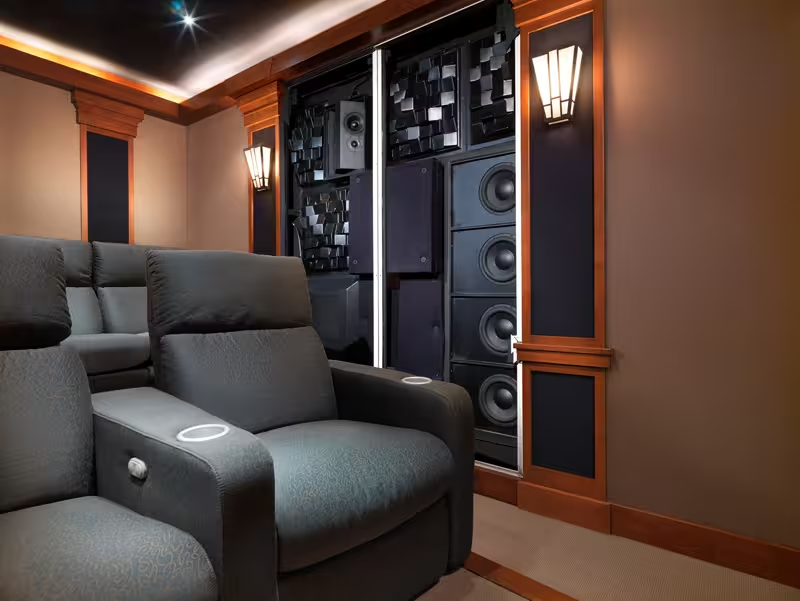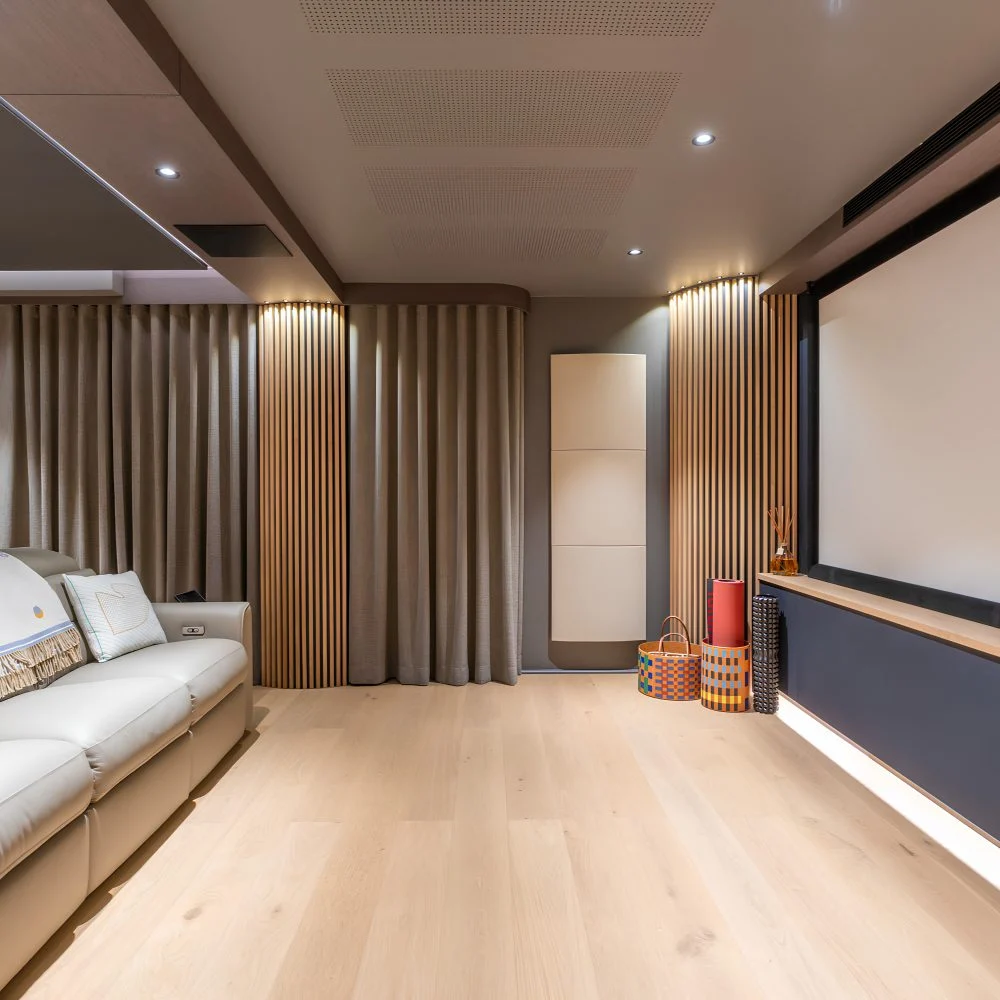
High-performance speakers promise immersive audio, powerful dynamics, and enveloping surround effects. But even the most premium surround sound system won’t fully deliver unless the placement and calibration are done precisely. Proper speaker placement for home theatre ensures every seat is in the “sweet spot,” where sound staging, clarity, and surround effects work together to transport you into the story and elevate your home theatre experience.

Why Speaker Placement & Calibration Matter
- Sound Staging & Imaging
When speakers are placed correctly, the left, centre, right, and surround speaker channels form a coherent three-dimensional sound field. You hear dialogue from the screen, ambience from the sides or overhead, and directional effects that move around you. Misplaced speakers in standard surround sound configurations such as 5.1, 7.1 & dolby atmos speaker layouts can collapse the soundstage, blur directionality and leave dead zones. - Even Frequency Response
Rooms have quirks: reflections, standing waves, corners that exaggerate bass. Calibration helps even out those variations. Without calibration, some frequencies can be too loud in one seat and weak in another, degrading clarity, especially of dialogue and mid-range. Smart placement strategies and subwoofer placement delivers the best bass and clearer direct sound. - Maximising System Performance
Premium speakers and processors have degrees of precision built in (delay, crossovers, time alignment, level balancing, etc.). If not tuned properly, much of their potential is unused. Calibration unlocks that performance so each speaker plays the right content at the right time for optimal sound. - Consistency Across Listening Positions
In multi-seat setups, what sounds great in the “sweet spot” often sounds poor in peripheral seats unless care is taken. With correct speaker setup and calibration, everyone gets a good surround sound experience across the cinema room.

Key Principles of Good Speaker Placement
Drawing from Wavetrain’s experience and published guides (for example Home Theatre Speaker Guide , Calculating the Optimum Chair Position, Overcoming Acoustic Challenges) some placement rules that consistently make a difference for speakers in a home theatre:
| Principle | What It Means / Why It Helps |
| Symmetry | Front left and right speakers should be symmetrically placed relative to the screen and room centreline with the centre speaker directly under or behind an acoustically transparent screen when possible. This supports balanced imaging and avoids one side dominating and the centre speaker delivering dialogue from an ideal location. |
| Ear Level Alignment | Front speakers (left, right, centre) should be at or near ear height in the listening position. Vertical misalignment reduces clarity, especially for vocals. Speakers should be placed so the tweeters align with ear height of the main speakers at the main listening position. |
| Distance & Timing (Delay / Time Alignment) | Speakers must be set so sound from all channels arrives at listeners at the correct times. Calibration tools adjust delay so that the centre channel, for example, aligns with left/right. Without this, imaging suffers. Correct delays define the sound path of direct sound versus reflections. |
| Subwoofer Positioning | Bass behaves differently: it’s less directional but more prone to variation across seats. Multiple subwoofers (minimum of 2 is recommended) help even bass distribution. Crawling test or measurements help find optimal positions. Thoughtful subwoofer placement can affect sound more than any other single change. |
| Avoid Boundary Effects | Seats shouldn’t be too close to walls (especially rear or side walls), which create exaggerated bass or unwanted reflections. Speakers a few feet from corners often yield optimal surround and best sound. |
Surround sound speaker placement basics for common layouts: 5.1 system uses two rear speakers (often called two surround speakers) to the sides/rear; 7.1 system adds dedicated rear surround channels;
Dolby Atmos speakers utilise either in-ceiling or ceiling mounted speakers to fill the empty/blank space overhead to add a level of complete immersion.
Calibration: The Hidden Difference
Placement is only half the job. Calibration makes final adjustments so the whole home theatre system performs cohesively.
- Level Balancing: Adjusting the relative loudness of each speaker so the system obeys the reference mapping (e.g. the centre speaker is neither too loud nor too soft). Wavetrain uses advanced processors and tools (often beyond just auto-EQ) to check this.
- Distance / Delay Settings: Measuring the physical or effective distance from listener to each speaker, and configuring delays so that sound from all directions arrives coherently. This is especially important for surround and Atmos channels.
- Crossover Points & Frequency Responses: Ensuring speakers and subwoofers hand off at the correct frequency so that there are no gaps or overlaps. Also checking how the room modifies the frequency response, and using absorption, diffusion, or DSP correction to flatten peaks or fill dips.
- Room Modes & Acoustic Treatment Integration: Calibration must work with physical treatments (bass traps, panels, diffusers). Even the most precise electronics cannot fully compensate for serious acoustic issues. Wavetrain emphasises early integration of acoustic design to support calibration and optimise sound in your home.

How Wavetrain Ensures Every Seat Counts
From our past projects and guides, we’ve developed practices that consistently deliver performance across all seating positions for a full surround sound field:
- Sweet Spot Design First: Before installing any electronics, we map out where people will sit, and how to position speakers so that the best listening point(s) are prioritised. We confirm the position for optimal sound for each row.
- Seating Layout That Respects Acoustics: Ensuring seats aren’t flush to the rear or side walls, planning adequate spacing between rows (including for reclining seats), and ensuring rear seats on a riser if necessary so they see and hear well.
- Use of Multiple Subwoofers: To even out bass response across seats. Especially in larger or irregularly shaped rooms. Good speaker positioning plus subwoofer placement can enhance sound more than upgrades to different speaker models.
- Professional Calibration Services: Our team (with credentials in ISF, PVA, etc.) uses precision instruments and measurement tools, not just “auto” or basic setups, to fine-tune speaker levels, delays, crossovers, and room correction.
Common Pitfalls & How to Avoid Them
When setting up your home theatre, knowing what often goes wrong helps you prevent issues before they happen:
| Pitfall | Consequence | How to Avoid |
| Putting seats right against boundaries (rear or side walls) | Bass boom, reflections, uneven frequency response; poor clarity for rear seats. | Leave spacing; use risers for rear rows; ensure boundary speakers are placed well; surround speakers should be placed slightly above ear height and a little behind the main listening position. |
| Discrepant speaker brands/types without matching timbre | Sound coloration, inconsistency between channels. | Use matching speakers; ensure similar performance specs; calibrate voicing if necessary. |
| Relying solely on preliminary auto-EQ without physical placement | Status quo of poor imaging, room anomalies persist. | Combine physical placement adjustments with calibration tools and measurement; confirm ideal placement for rear surround and height speaker locations. |
| Neglecting vertical placement (ear height, overheads) | Imaging is off; overhead or surround channels feel detached or directionless. | Place speakers (front, surrounds) at correct height; ensure overhead speaker arrays or Dolby Atmos speakers are mapped correctly. In a 5.1 speaker layout, keep surrounds to the sides; in 7.1, add dedicated rear surround. |
Final Thoughts
Speaker placement and calibration are not extras, they are essential. They are the difference between hearing dialogue clearly, feeling enveloped by sound, and being drawn into the world of the film, or simply “listening to something that’s loud but not quite right.” Speakers should be located with precise placement to get the best sound and optimal surround, whether you run 5.1 surround, 7.1, or a full surround immersive sound layout with Dolby Atmos speakers.
To build a home cinema system that delivers its promise:
- Plan your home theatre setup, seating and speaker positioning early.
- Prioritise symmetry, proper height, and distance for front left and right speakers and the centre channel speaker.
- Use accurate calibration tools and techniques on your home theatre receiver or surround sound processor.
- Integrate acoustic treatments so sound is shaped by both hardware and space to get the best sound in your home.
At Wavetrain, our many years of designing, installing, and fine-tuning home theatre rooms have shown that even with similar speakers, systems can perform dramatically differently depending on how well this work is done. For clients who want reference-quality audio in every seat, speaker placement + calibration are often what separate great-sounding rooms from world-class ones.